From PYP 4 to DP 2: one continuous program
An international-school education is a long journey, yet students often experience it as disconnected academic years. A new teacher, terminology and set of expectations arrive each August. The International Baccalaureate is designed as a continuum, so preparation works best when skills developed in the Primary Years Programme are deliberately carried through the Middle Years Programme and into the Diploma Programme.
What “PYP 4 to DP 2” means
PYP 4 commonly refers to the Grade 4 stage of the Primary Years Programme, while DP 2 is the final Diploma year, usually Grade 12. Between them sit upper primary, MYP and DP 1. Labels vary among schools, but the developmental sequence remains: foundation, application, independence and advanced performance.
A continuous programme does not teach Diploma content to a nine-year-old. It identifies the habits that later success requires and develops them at the correct level. Number sense becomes algebraic reasoning; explaining an observation becomes evidence-based analysis; a guided inquiry becomes an independent investigation.
Why continuity matters in international curricula
Skills develop cumulatively
Advanced mathematics depends on fluent arithmetic, proportional reasoning, algebra and interpretation of functions. Literary analysis depends on close reading, vocabulary, paragraph logic and evidence. When a weak foundation is ignored, later lessons become slower and more stressful.
Academic language remains consistent
Students perform better when teachers use stable language for reasoning: identify, explain, justify, evaluate and reflect. These command terms become progressively more demanding, but their purpose remains recognisable. Consistency reduces the effort spent decoding instructions and leaves more attention for thinking.
Progress can be seen over time
A test captures one moment. Longitudinal work reveals whether errors come from missing knowledge, weak reading, rushed execution or inconsistent study habits. A continuing team can intervene earlier instead of repeating short-term fixes every year.
The PYP foundation: curiosity with structure
In upper primary, students should remain curious while learning that good thinking can be organised. Inquiry does not mean guessing without foundations. Children need explicit teaching, guided practice and opportunities to apply knowledge in meaningful contexts.
Mathematics in PYP 4 and PYP 5
Priorities include place value, operations, fractions, decimals, measurement, patterns and clear communication of method. Mental calculation and estimation help students detect unreasonable answers. Word problems build the habit of translating language into mathematical relationships.
English and communication
Students should read varied fiction and nonfiction, summarise accurately, infer from evidence and write organised paragraphs. Vocabulary is learned through context and use. Oral explanations, presentations and discussion strengthen the logical sequencing required in writing.
Independent learning habits
At this stage, independence means bringing materials, recording tasks, attempting a problem before asking for help and reflecting briefly on feedback. Small routines established now prevent larger organisational problems later.
The transition into MYP
The Middle Years Programme asks students to apply knowledge in unfamiliar contexts and understand assessment criteria. The change can surprise learners who previously relied on correct final answers. They must now explain processes, evaluate choices and connect concepts.
From arithmetic to algebra
Students move from calculating known quantities to representing relationships. A strong bridge includes integers, fractions, ratios, equations, coordinate geometry and patterns. Teachers should diagnose misconceptions early because algebra magnifies every weakness in number sense.
From comprehension to analysis
English tasks increasingly ask how a writer creates meaning. Students need a repeatable sequence: make a claim, select evidence, identify the technique, explain its effect and connect it to the larger argument. The same reasoning supports humanities and science reports.
Using criteria productively
Rubrics should guide planning and revision instead of appearing only when marks are returned. Students can translate each criterion into a checklist, examine model responses and annotate where evidence of achievement appears.
MYP 4 and MYP 5: preparing for senior secondary school
The later MYP years bridge into IBDP, IGCSE or another senior programme. Workload and abstraction increase, but the greatest change should be ownership. Students need a calendar, a revision system and the ability to seek help before a deadline.
Mathematics should combine conceptual explanation with timed, accurate practice. Sciences require confident use of variables, units, graphs, uncertainty and evaluation. Languages require sustained reading and precise argument. Interdisciplinary tasks teach students to transfer methods rather than store subjects in separate boxes.
Choosing Diploma Programme subjects wisely
Subject selection should balance interest, demonstrated strength, university prerequisites and total workload. A prestigious combination that causes chronic overload is rarely strategic. Families should examine evidence: grades, teacher feedback, enjoyment of difficult work and likely university direction.
Standard Level and Higher Level
Higher Level is not simply “more chapters.” It usually involves greater depth, pace and independence. Students considering Mathematics Analysis and Approaches HL need secure algebra, functions and problem-solving habits. The question is not only whether a student can pass, but whether the combination leaves time to perform across six subjects and the core.
DP 1: build systems before deadlines multiply
The first Diploma year establishes the trajectory for the second. Students should organise notes by syllabus point, use active recall, solve exam-style questions and maintain an error log. Weekly review prevents every topic from becoming a last-minute relearning exercise.
Internal Assessments and the Extended Essay
Good coursework begins with a manageable question and realistic timeline. Students must understand academic integrity, citation and the difference between teacher guidance and authorship. Breaking research into proposal, source collection, outline, draft and revision makes large tasks less intimidating.
Theory of Knowledge and CAS
TOK rewards careful examination of how claims are produced and justified, not vague philosophical language. CAS should be authentic, balanced and documented consistently. Neither component should be postponed until academic pressure peaks.
DP 2: performance, synthesis and calm execution
In the final year, students complete coursework while preparing for cumulative examinations. A useful plan works backwards from official deadlines and school mocks. Revision combines content review, retrieval, past-paper practice and correction. Rereading notes creates familiarity but not reliable recall.
Timed papers should be introduced progressively. First solve by topic without pressure, then combine topics, then simulate full conditions. Every paper should produce an error analysis: knowledge gap, interpretation error, weak method, careless execution or time-management problem. The following week's practice should respond to that evidence.
A practical year-round learning system
- Weekly: review current concepts, complete targeted practice and update an error log.
- Monthly: revisit older units, check organisation and compare progress with goals.
- Each term: complete a cumulative assessment and identify two high-impact priorities.
- Before transitions: diagnose prerequisite skills for the next grade or programme.
- During holidays: repair specific gaps while protecting genuine rest.
The role of parents
Parents provide structure without taking ownership away from the learner. A short weekly conversation about deadlines, challenges and next actions is more effective than daily interrogation about marks. Ask for evidence of a plan, provide a workable study environment and communicate with teachers when patterns persist.
Watch for sleep loss, avoidance, persistent anxiety or a sudden collapse in organisation. More tuition hours are not automatically the answer. Sometimes the learner needs prioritisation, a repaired foundation or fewer competing commitments.
Common breaks in the PYP-to-DP journey
Changing tutors without a handover
New support should begin with diagnostic evidence and a record of completed work. Otherwise, students repeat comfortable content while important gaps remain hidden.
Chasing next year's syllabus too early
Acceleration is useful only when foundations are secure. Superficial exposure to advanced topics can create confidence that disappears under assessment conditions.
Focusing only on marks
Marks matter, but they are lagging indicators. Track controllable behaviours: completed retrieval practice, corrected mistakes, timely drafts and increasing independence.
Frequently asked questions about the IB continuum
Must a child attend PYP to succeed in MYP or IBDP?
No. Students enter IB programmes from many curricula. A transition is easier when schools diagnose differences in content, terminology, inquiry, writing and assessment. Targeted bridging can teach criteria-based responses and independent study habits without assuming the learner must repeat earlier years.
When should preparation for IBDP begin?
Healthy preparation begins by strengthening current-grade foundations, not by racing through Diploma chapters. In Grades 8 to 10, students can consolidate algebra, reading, writing, scientific reasoning and organisation. Formal subject-level preparation becomes more relevant once likely Diploma choices are clear.
Is continuous tutoring necessary for every student?
No. Continuity describes a coherent learning plan, not compulsory tuition throughout childhood. Some students need periodic diagnostics, transition support or short interventions; others benefit from sustained coaching. The correct intensity depends on evidence, school support and the learner's independence.
How do we know whether a student is ready for Maths AA HL?
Look beyond one examination mark. Readiness includes secure algebra and functions, accurate symbolic work, persistence with unfamiliar problems, willingness to practise and capacity to manage a demanding subject combination. A diagnostic assessment and teacher feedback provide better evidence than preference alone.
What should parents do when grades suddenly fall?
Identify the pattern before adding hours. Review recent work, sleep, attendance, deadlines and teacher comments. Separate missing concepts from careless execution, stress or organisation. A focused response to the cause is more effective than repeating every topic or imposing a general study increase.
How Preface Institute supports students from PYP 4 to DP 2
Preface Institute provides concept-first academic support across the international-school journey, with experience in IB, Cambridge IGCSE and senior-secondary mathematics and English. Each year's work is connected to the foundations below it and the expectations ahead.
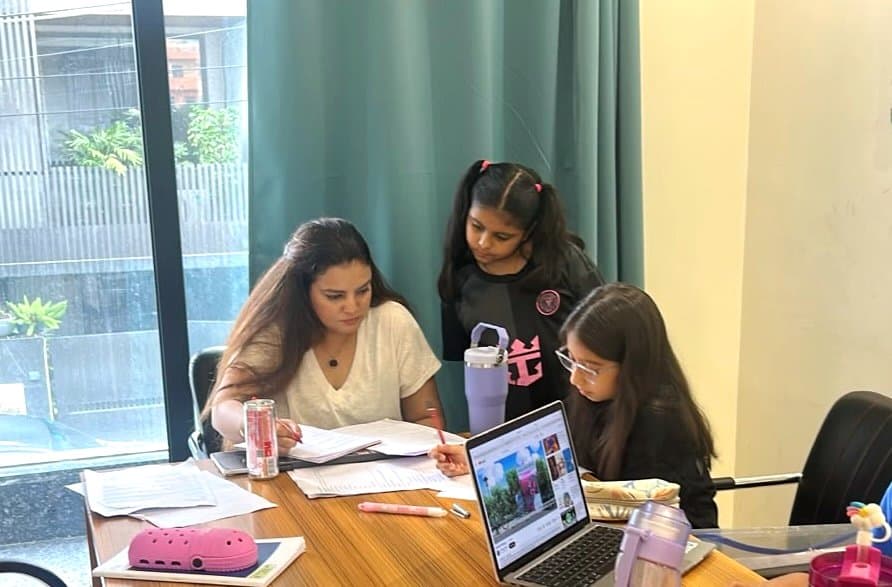
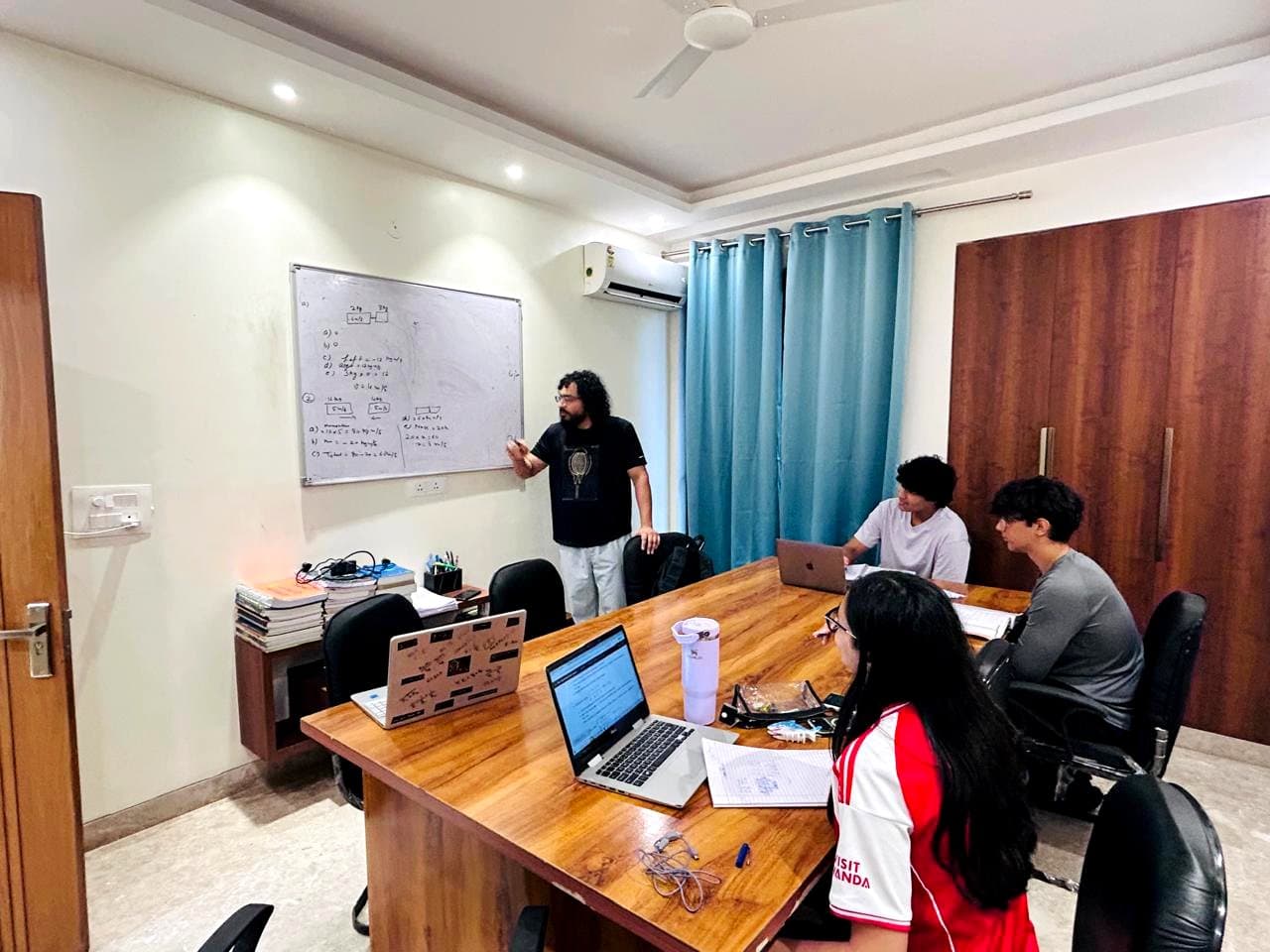
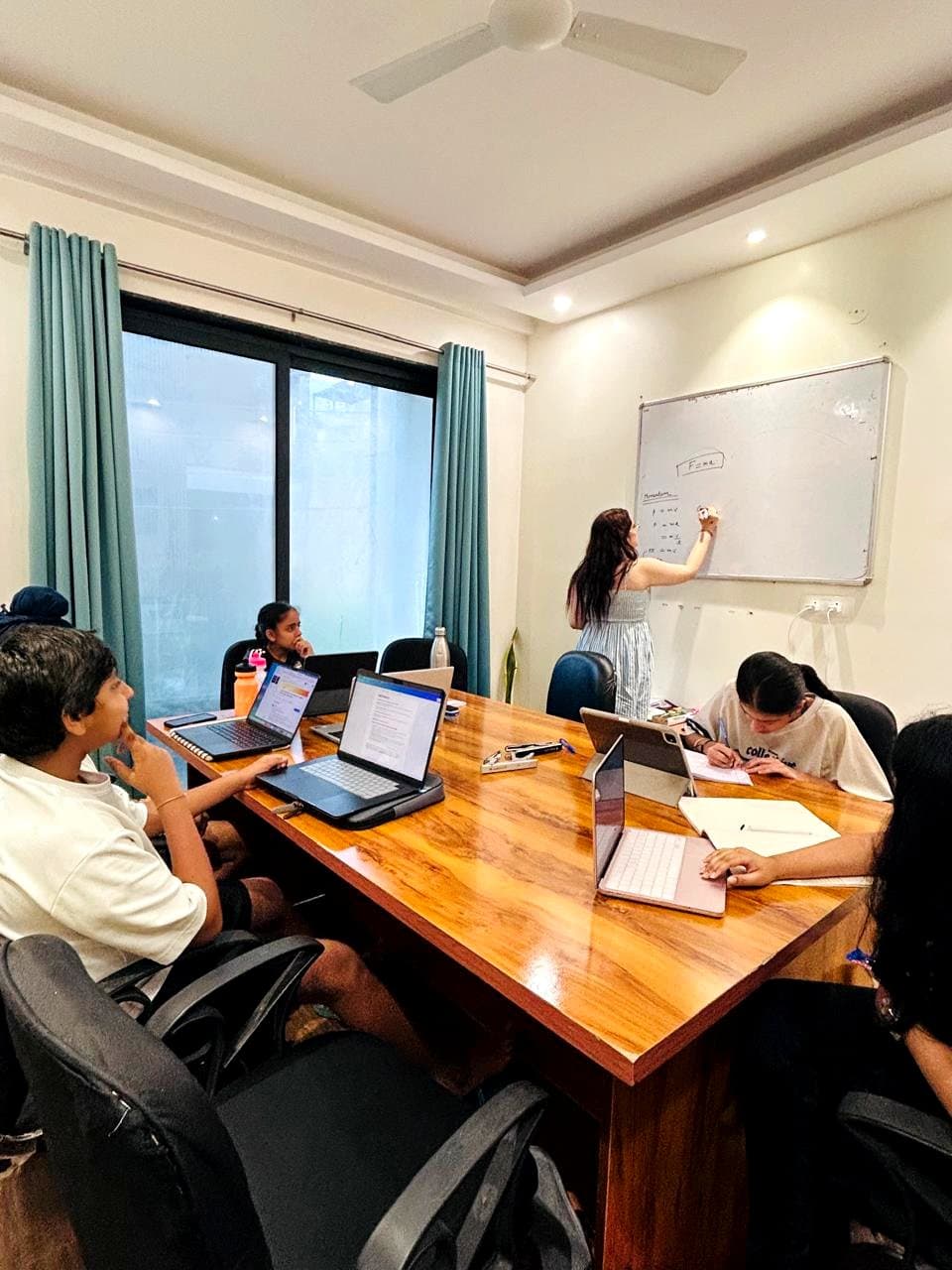
Students can be assessed for gaps, placed at an appropriate level and supported through small batches or focused guidance. Teachers combine explanation, board-aligned practice, regular checks and feedback. As expectations rise, support evolves from core fluency to criteria-based responses, exam technique, mock papers and independent study systems.
Published student stories include a Pathways School learner achieving 7/7 in IBDP Mathematics AA HL and a student achieving 800/800 in SAT Mathematics. Individual outcomes depend on starting point, effort and context, so these examples show what structured preparation has supported rather than guaranteeing the same score.
Families in Gurugram can begin with the student's school, grade, curriculum, current work and goals. That evidence enables Preface Institute to recommend a focused plan that strengthens today's learning while preparing responsibly for the next stage.
Experience Concept-First Coaching
Classes for IB, IGCSE, American curriculum & Aptitude Test Prep in Sector 42, Gurugram.