IB vs IGCSE vs the American curriculum: a parent's honest guide
Choosing between the International Baccalaureate, Cambridge IGCSE and an American curriculum is not a contest to identify the universally “best” board. It is a matching decision. The right curriculum aligns with a student's learning style, academic strengths, interests, future plans and the quality of the school delivering it.
This detailed guide compares the three pathways for families in Gurugram and elsewhere in India. Schools implement programmes differently, so parents should use it as a framework and verify subject options, assessment policies and graduation requirements directly with each school.
IB vs IGCSE vs American curriculum at a glance
- IB: broad, inquiry-oriented and internationally standardised, with emphasis on analysis, research, reflection and communication.
- Cambridge: subject-focused and examination-led, with clear syllabuses, structured progression and considerable choice.
- American: flexible and credit-based, usually combining continuous GPA assessment with electives, extracurricular depth and optional AP courses.
These are tendencies, not stereotypes. An excellent Cambridge classroom can be inquiry-driven, while an IB school can provide explicit instruction and disciplined practice.
Understanding the International Baccalaureate
PYP, MYP and DP
The IB continuum includes the Primary Years Programme, Middle Years Programme and Diploma Programme. Schools may offer one, two or all three. PYP uses inquiry and transdisciplinary themes. MYP develops conceptual understanding and criteria-based assessment. The two-year Diploma Programme combines six subjects with Theory of Knowledge, the Extended Essay and Creativity, Activity, Service.
How IB students are assessed
IB assessment combines school-based components with externally assessed work and examinations, depending on programme and subject. Diploma subjects are graded from 1 to 7, with additional points available through the core. Internal Assessments require students to investigate, analyse and communicate within defined criteria.
Who tends to thrive in IB
IB can suit students who enjoy connecting ideas, discussing interpretation, conducting research and managing long-term commitments. Success requires organisation and sustained effort. A bright student who postpones every draft may struggle more than a steady student with a reliable weekly system.
Potential IB challenges
The breadth of the Diploma, simultaneous coursework and core requirements can create pressure. Subject selection matters, especially at Higher Level. Students entering IB may need support with criteria language, analytical writing and independent planning.
Understanding Cambridge IGCSE and A Levels
IGCSE structure
Cambridge IGCSE is commonly studied in Grades 9 and 10, although structures vary. Students choose subjects and work toward externally assessed examinations, sometimes with practical, oral or coursework components. Syllabuses define content and assessment objectives clearly.
Progression to AS and A Level
After IGCSE, many students continue to Cambridge International AS and A Levels. A Levels allow concentrated study of fewer subjects at significant depth. This can suit learners with established academic directions who prefer specialisation over the IB Diploma's compulsory breadth.
Who tends to thrive in Cambridge
Cambridge often suits learners who appreciate explicit subject boundaries, detailed syllabuses and examination clarity. Strong conceptual understanding remains essential because high-level questions require application, not memorised reproduction.
Potential Cambridge challenges
Final examinations may carry substantial weight, so cumulative retention and exam technique are important. Subject freedom can also lead to premature narrowing if choices are made without checking university prerequisites.
Understanding the American curriculum
Credits, GPA and graduation
An American high school programme usually awards credits across required and elective subjects. Performance contributes to a grade point average. Requirements differ by school and accrediting context, so families must inspect the exact diploma, course catalogue and grading policy.
Advanced Placement courses
AP courses offer college-level study in individual subjects, followed by standardised examinations scored from 1 to 5. Students can build a challenging profile by selecting APs aligned with their strengths. AP is not a complete curriculum by itself; it sits within the wider high school programme.
Who tends to thrive in an American programme
The pathway can suit students who value choice, continuous assessment, extracurricular involvement and the ability to combine subjects at different levels. It can work well for students targeting US universities, though graduates also apply worldwide.
Potential American-curriculum challenges
Because implementation varies, the school matters enormously. Families should ask how GPA is calculated, whether courses are weighted, which APs reliably run and how academic rigour is documented. Continuous assessment means consistency across the year matters.
Comparing academic depth and breadth
The IB Diploma preserves breadth across languages, individuals and societies, sciences, mathematics and the arts or an alternative. Cambridge A Levels typically permit greater specialisation. American programmes occupy a flexible middle ground: students meet broad graduation requirements but can create depth through honours and AP courses.
A future engineer may appreciate focused A Level Mathematics, Further Mathematics and Physics; another may prefer IB's breadth and research core; a third may want AP Calculus, Physics and Computer Science alongside design or humanities electives. The strongest choice is the one the student can pursue deeply and sustainably.
IB vs IGCSE vs American mathematics
All three pathways can deliver rigorous mathematics. IB Diploma offers Mathematics: Analysis and Approaches and Mathematics: Applications and Interpretation at Standard and Higher Level. AA emphasises analytical methods and mathematical argument; AI gives greater emphasis to modelling, statistics and technology, although both require reasoning.
Cambridge mathematics follows detailed syllabuses and can progress to demanding A Level and Further Mathematics work. American schools may offer a sequence from algebra and geometry through precalculus, calculus and statistics, with AP Calculus AB or BC and AP Statistics as common advanced options.
Parents should look beyond course names. Ask about prerequisites, teaching hours, calculator expectations, assessment style and the student's demonstrated algebraic foundation.
English, writing and research
IB consistently emphasises interpretation, oral communication and evidence-based analysis, with the Extended Essay providing an independent research experience. Cambridge English and literature syllabuses reward close reading, structured responses and precise knowledge of texts. American programmes often combine literature, composition, research projects and presentation, with AP English Language or Literature available in some schools.
University readiness depends less on the label than on repeated practice with sustained reading, argument, citation and revision. Parents should review real student work and ask how feedback leads to a stronger draft.
Assessment style and student stress
IB assessment pressure
Pressure is distributed across examinations, Internal Assessments and core deadlines. The workload is manageable with planning but punishing when several long-term tasks are delayed.
Cambridge assessment pressure
External examinations create clear targets and can concentrate pressure near exam periods. Frequent past-paper practice and cumulative revision are important.
American assessment pressure
GPA reflects ongoing work, so one examination is less likely to define the entire outcome. However, quizzes, projects, participation and semester assessments can create continuous demands.
University admissions and global recognition
IB, Cambridge and reputable American high school diplomas are widely used for university applications. Admissions teams evaluate context: curriculum rigour, subject choice, grades, predicted or final results, school profile, recommendations and activities. Specific programmes may require mathematics, science, language or laboratory preparation.
Families should consult official university requirements for likely destinations. Avoid choosing a board because someone claims it guarantees admission. No curriculum substitutes for strong performance, appropriate subjects and an authentic application.
Questions parents should ask each school
- How long has the school delivered this curriculum, and what training do teachers receive?
- Which subjects and levels actually run every year?
- What are average class sizes and teacher-retention patterns?
- How are struggling and advanced students supported?
- How much homework and independent study is typical by grade?
- How are coursework deadlines coordinated across subjects?
- What university counselling is available, and from which grade?
- Can the school share anonymised examples of assessment and feedback?
How to match a curriculum to your child
Consider learning behaviour, not only marks
Does the student initiate work, manage deadlines and enjoy open-ended questions? Or do they perform best with explicit content, defined milestones and concentrated examination preparation? Neither profile is superior. Honest matching prevents unnecessary friction.
Check strengths and prerequisites
Map likely university directions without forcing an early career decision. Preserve essential options. A learner considering engineering, economics, medicine, architecture or competitive mathematics may need specific senior courses.
Evaluate the whole school experience
Teacher quality, pastoral care, peer culture, timetable design and extracurricular opportunities can matter more than the curriculum brand. A well-delivered second-choice board is usually better than a poorly delivered first choice.
Common curriculum myths
“IB has no exams.” The Diploma includes significant external assessment. “Cambridge is only memorisation.” High-level questions demand application and analysis. “American schools are easy.” Rigour varies, and a demanding honours/AP programme can be substantial. “One board guarantees foreign admission.” Universities assess the complete academic and personal context.
A practical decision process for families
Begin with the learner rather than the board. Record subject strengths, work habits, interests and current challenges. Shortlist schools that deliver appropriate pathways well. Compare real subject menus and assessment calendars. Check future prerequisites, speak with current families where possible and let the student experience the environment.
Finally, distinguish temporary difficulty from fundamental mismatch. Every rigorous curriculum contains uncomfortable periods. The goal is not to eliminate challenge, but to choose a form of challenge that develops the student without creating preventable overload.
Frequently asked curriculum questions
Which curriculum is hardest?
Difficulty depends on subjects, levels, assessment style and student fit. IB Diploma creates breadth and concurrent coursework; Cambridge can concentrate pressure in deep subject examinations; a demanding American honours and AP schedule requires continuous high performance. The better question is which challenge suits the learner.
Is IB better for universities abroad?
IB is respected and familiar to many universities, but Cambridge qualifications and strong American diplomas are also widely recognised. Admissions decisions depend on grades, course rigour, prerequisites and the wider application. Families should consult each university's official requirements.
Can a student switch from CBSE or ICSE to an international board?
Yes. Students commonly make successful transitions. They may need bridging in analytical writing, investigations, calculator use, criteria interpretation or continuous assessment. A diagnostic review should identify actual gaps rather than assuming the entire previous curriculum was inadequate.
Which curriculum is best for engineering or medicine?
No single label is automatically best. The student must select the mathematics and sciences required by target universities and perform strongly. Laboratory exposure, depth, entrance-test requirements and country-specific rules should all inform the decision.
Should we choose the curriculum before choosing the school?
Use both factors together. First identify suitable pathways, then compare schools that deliver them well. An experienced faculty, stable subject offering and effective academic support often influence outcomes more than the board name printed on the prospectus.
How Preface Institute helps across IB, IGCSE and American curricula
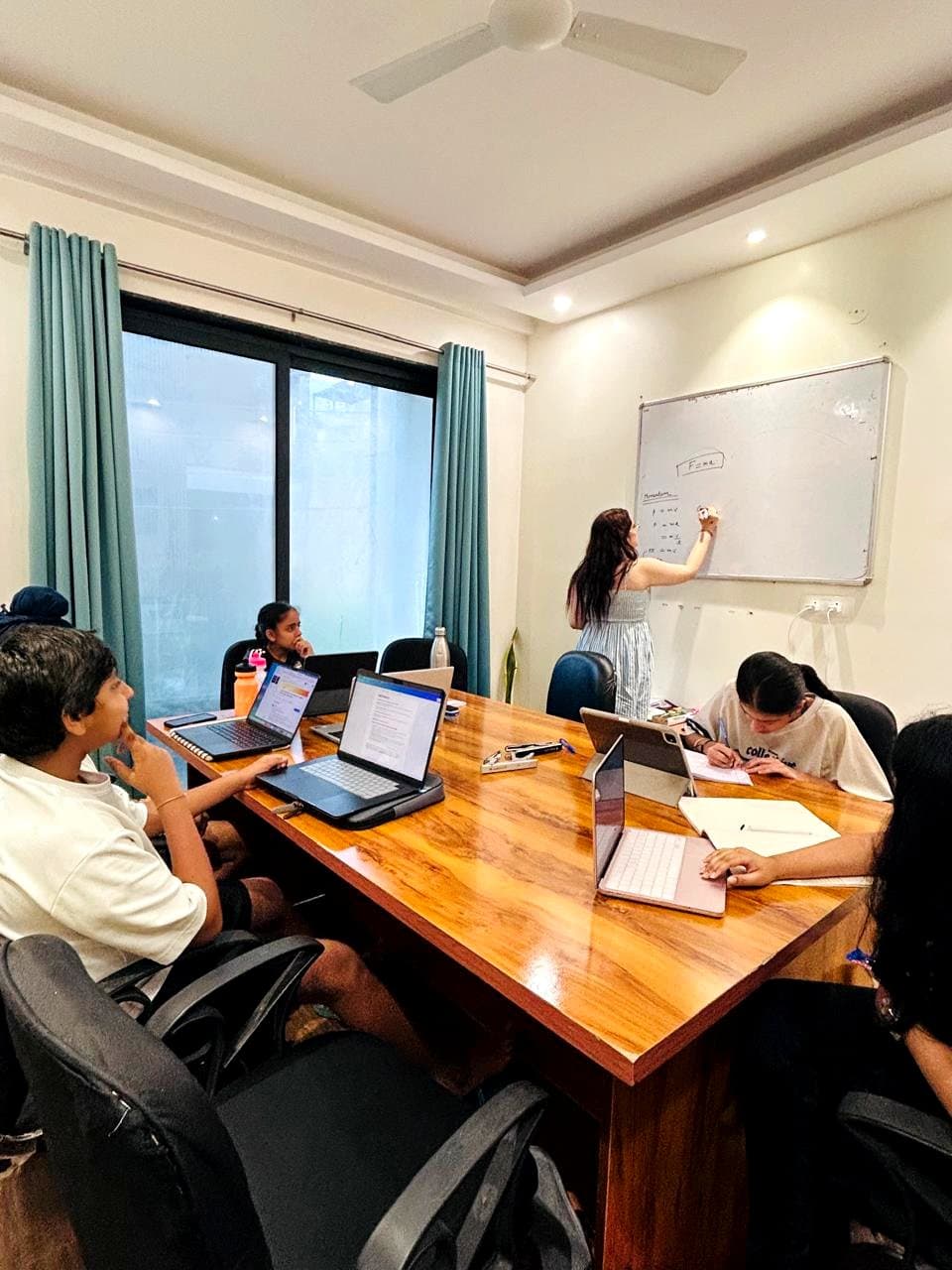
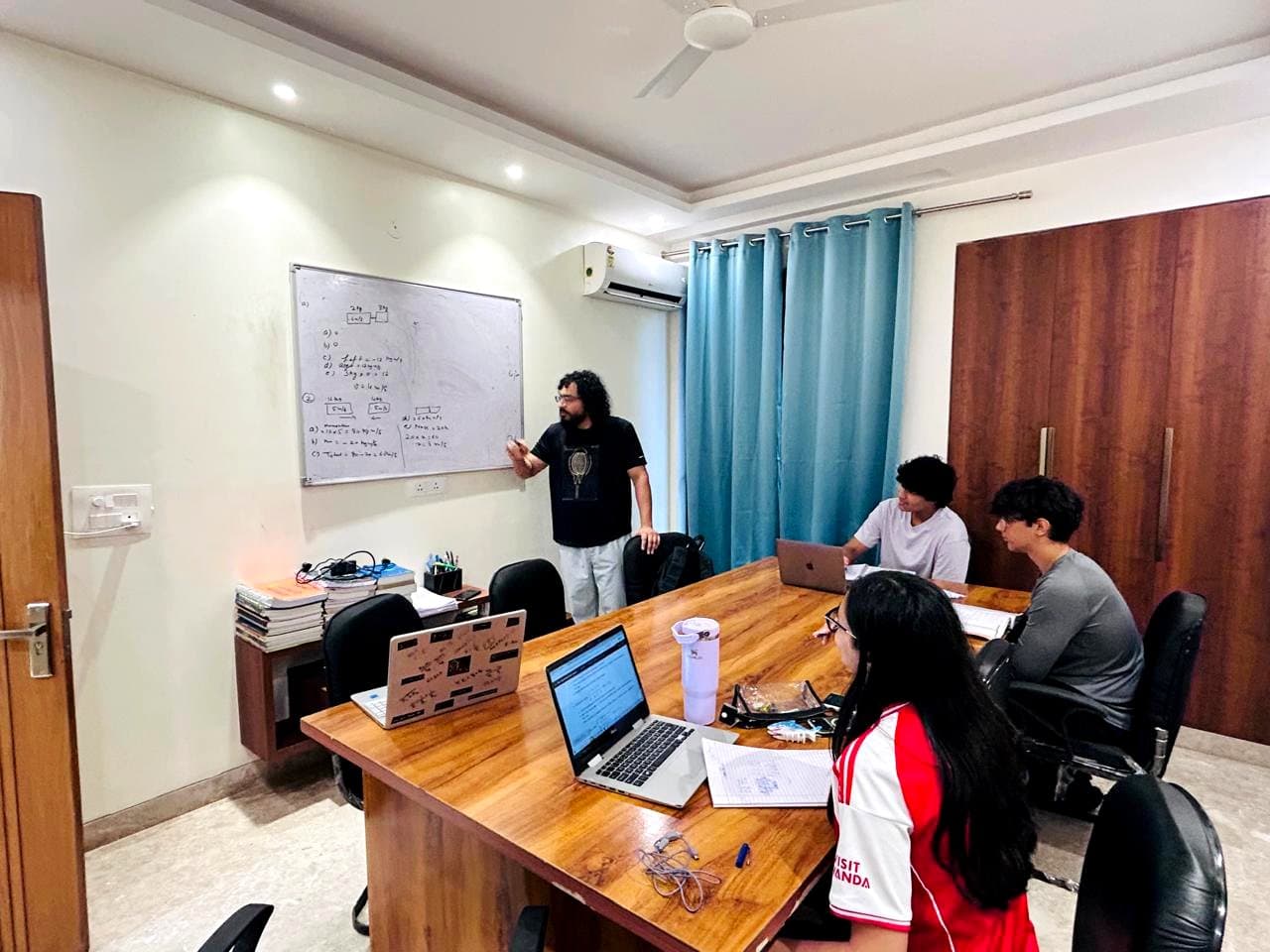
Preface Institute works with international-school students in Gurugram across IB, Cambridge IGCSE and American programmes. Support begins by identifying curriculum, course level, current evidence and specific gaps. Teaching connects core concepts to the assessment language and question types the student actually faces.
In mathematics, the emphasis is on first-principles understanding, accurate method, unfamiliar problem solving and board-standard practice. English support develops reading, analysis, argument and writing. Exam preparation can include targeted revision, timed papers, error analysis and mocks instead of generic repetition.
Published results include a Pathways School student achieving 7/7 in IBDP Mathematics AA HL and a student achieving 800/800 in SAT Mathematics, alongside testimonials from international-school learners. These outcomes demonstrate past experience but do not guarantee an identical result; progress depends on starting point, consistency and programme fit.
Families deciding between boards can use an academic consultation to clarify differences, identify prerequisite strengths and form better questions for prospective schools. Once a curriculum is chosen, Preface can build a focused support plan around the school's syllabus and the student's goals. The objective is not merely to survive a board, but to understand deeply, perform confidently and retain future options.
Experience Concept-First Coaching
Classes for IB, IGCSE, American curriculum & Aptitude Test Prep in Sector 42, Gurugram.